
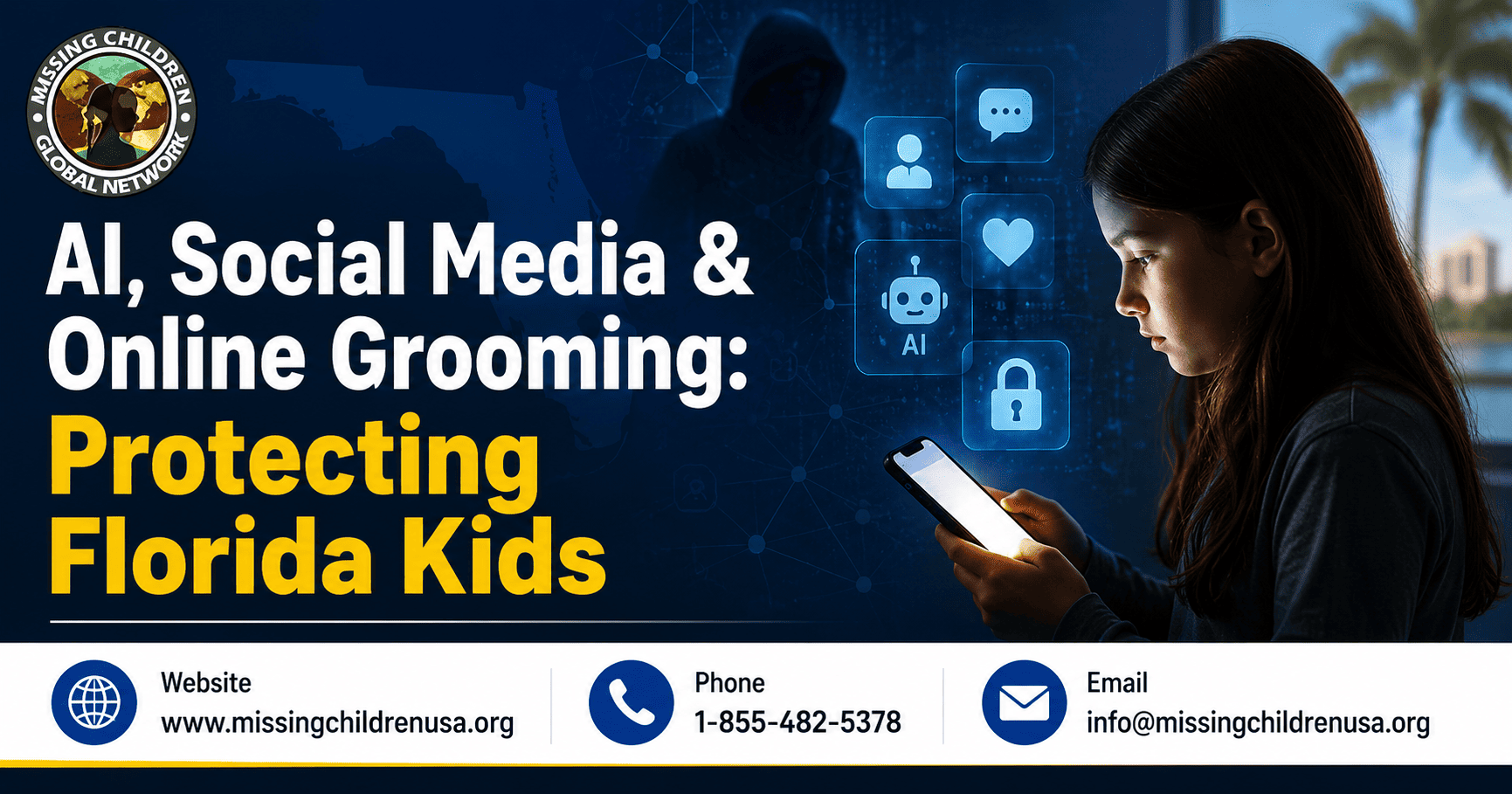
The online world a parent knows and the online world a child knows can be completely different. That gap exists because of generational distance and the way each of them actually uses these platforms. Parents use social media to stay connected. Children use it to exist socially. The features, the shortcuts, the unspoken rules of each platform, kids absorb all of that naturally. Parents rarely do. And the people who misuse these tools understand that gap better than most families realize. They work inside it.
Missing Children Global Network has worked with Florida families for over 15 years, and a pattern that keeps appearing in cases involves a parent who had no idea something was wrong until it was already serious.
This is what parents need to know.
AI and Social Media Are Not the Same Problem, But They Connect
Social media has always carried risks for children. That part is not new. What changed is the speed at which contact happens, the tools available to people who want to manipulate children, and how convincingly those tools can disguise what is actually going on.
AI-generated profiles now look like real teenagers. AI-written messages sound natural and personal. A child who thinks they are talking to a peer from a different school may be talking to an adult using a generated identity on the other side of the country.
The platforms most popular with children, short video apps, gaming chat features, and anonymous messaging boards are designed around rapid engagement. They surface content based on what a child already responds to. If a child is lonely, isolated, or going through family problems, the algorithm picks that up through behavior and delivers more of what keeps them engaged. That same pattern is visible to anyone watching how the child interacts.
Groomers watch how children interact.
What Online Grooming Actually Looks Like
Grooming is not a single event. It is a process, and it usually takes weeks or months.
It starts with contact that feels harmless. A compliment. A shared interest. Someone who seems to understand what a child is going through at home or at school. The conversations move off the original platform quickly, usually to direct messaging apps where there is less moderation and no record visible to parents.
Over time, the relationship becomes exclusive. The adult encourages the child to keep the friendship private. Secrets become a way of testing loyalty. By the time anything overtly inappropriate occurs, the child often feels protective of the relationship and uncomfortable telling anyone about it.
Parents tend to notice the effects before they notice the cause. A child who pulls away from family. Unusual secrecy around a phone or device that was never secretive before. Mood changes that seem disconnected from what is happening at home or school. Gifts or money appearing without explanation. Being awake late at night when that was never usual.
None of these signals mean something is definitely wrong. But several of them appearing together at once warrants a calm, direct conversation.
What Florida Parents Can Actually Do
Monitoring software exists. Some parents find it useful. What it does not replace is a home environment where a child believes they can tell a parent something difficult without the conversation going badly.
Children who feel they will be blamed, punished, or have their devices taken away as a first response are less likely to say anything until a situation is already out of hand. The families that catch problems early tend to be the ones where the child trusted the parent enough to bring something forward.
That trust gets built before anything goes wrong. Not during.
Beyond that, a few practical things matter. Know which platforms your child uses and create accounts on them yourself, not to monitor but to understand how they work. Have specific conversations about AI-generated personas, not as a warning lecture but as an explanation of what they look like and how they operate. Ask who your child talks to online the same way you would ask who they spend time with at school.
For missing child help in Florida, organizations like Missing Children Global Network provide education, family support, and direct investigative assistance when situations escalate beyond a family’s ability to handle alone.
Frequently Asked Questions
- What is online grooming?
Grooming is a gradual process where an adult builds trust with a child, and sometimes their family, over time with the goal of manipulating them. It usually involves moving conversations to private channels, encouraging secrecy, and isolating the child from people who might intervene. It rarely looks alarming at the start, which is part of why it works.
- What are the biggest online warning signs parents should watch for?
Secrecy around devices that was not there before. Unexplained contact with adults the child cannot clearly identify. Gifts, money, or phone credit appearing from unclear sources. A child being awake late, withdrawing from family, or reacting defensively when asked simple questions about who they are talking to. One of these on its own may mean nothing. Several together are worth taking seriously.
- Can AI-generated content put children at risk?
Yes, in practical ways that are worth understanding. AI tools now allow someone to create a convincing teenage persona, generate profile photos of people who do not exist, and maintain conversations that feel natural across long periods. A child has very few reliable ways to identify this from their side of the screen. Teaching children that online identities are not verifiable, regardless of how genuine they seem, is more useful than expecting them to detect it themselves.
- Should parents monitor their child’s social media activity?
There is no single answer that fits every family or every age. Younger children generally need more direct oversight. Teenagers need more trust-based conversation. What matters more than monitoring software is whether a child would tell a parent if something felt wrong. Parents who focus on building that confidence tend to find out about problems earlier than those who rely primarily on surveillance.
- What should a parent do if they suspect online grooming?
Do not delete anything and do not confront the other party directly. Screenshot what you can see and contact local law enforcement. If the situation involves a missing child or a child who has made contact with someone offline, reach out to Missing Children Global Network immediately. They work alongside law enforcement and will not charge your family for their support.
Conclusion
The risks children face online are not hypothetical. They are documented, they are common, and they look nothing like what most parents picture when they think about online danger.
The children most at risk are not the ones whose parents are not paying attention. They are often the ones whose parents are paying attention but do not know what to look for.
If your family needs guidance or support around online child safety, or if you need to find a missing child who may have been in contact with someone online, Missing Children Global Network is available now. Call 1-855-482-5378.