
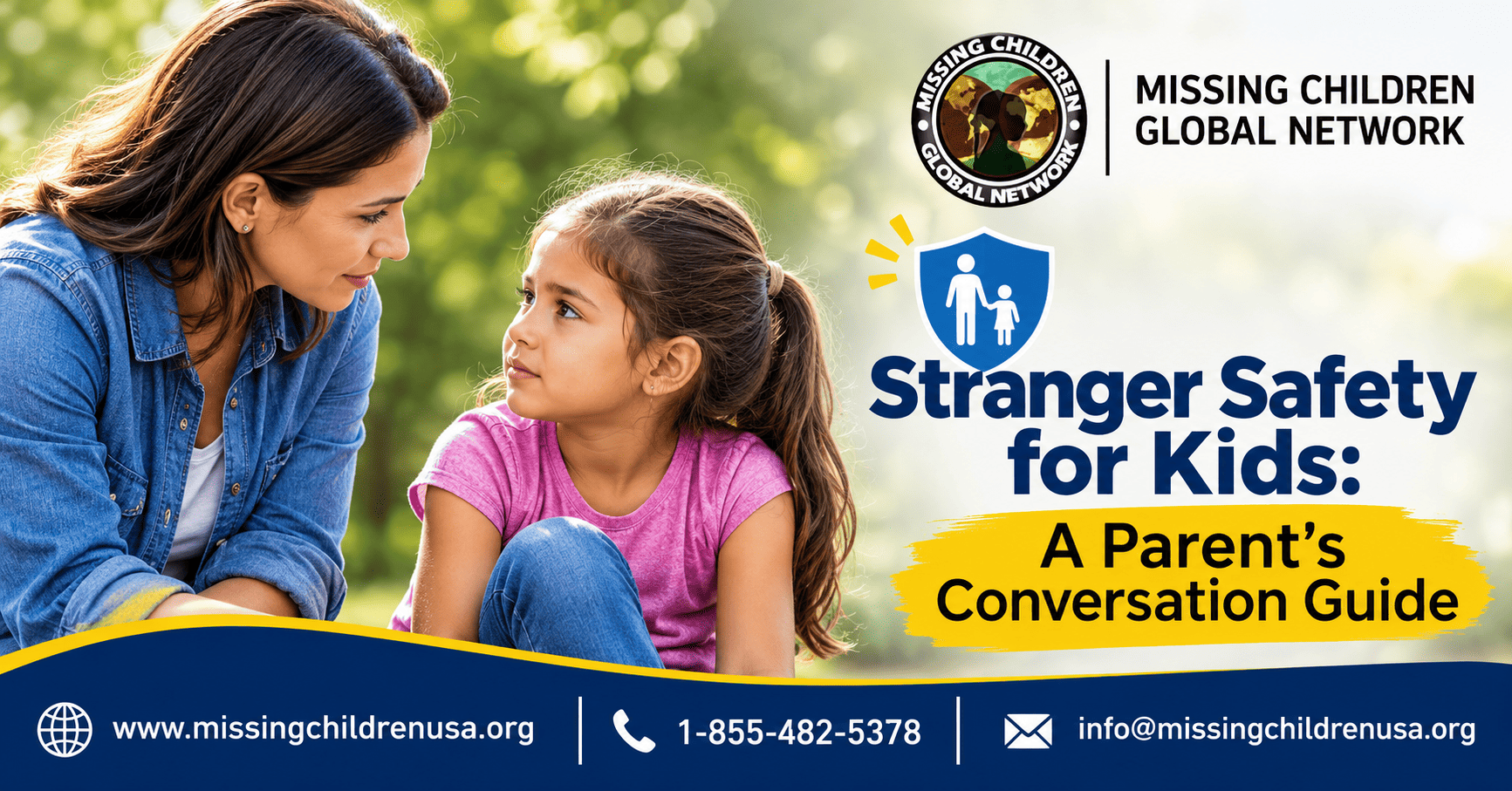
Most parents know they should have conversations with their child about stranger safety. However, they just don’t know how to do it.
This does not have to be a scary conversation. In fact, if done correctly, your child will feel more prepared. Organisations such as Missing Children Global Network work with families throughout Florida to provide parents with tips on how to keep their child safe.
Tips to Teach Children About Stranger Safety
Firstly, you must forget the idea that ‘stranger danger’ is a complete strategy.
Children will struggle if they are told not to speak to anyone they don’t know. This won’t prepare them for real-life scenarios where an adult they know asks them to do something that doesn’t feel right. Instead, you want to teach them how to identify unsafe behaviour and trust their gut feeling.
A more effective approach is to ensure your child can identify unsafe behaviour, knows what to do, and has an adult they can trust.
The idea of creating a ‘safety net’ (a few adults your child can name) can start early. Ask your child, ‘If anything happened and I wasn’t there, who would you go to?’ This will give your child a safety net.
Tips for Everyday Conversations
Children don’t learn safety rules in one go. They need to practise the rules.
Keep the conversation short and informal. While on a walk or drive, ask your child, ‘If someone you don’t know asked you for a lift, what would you do?’ Listen to their answer and gently remind them.
Role-playing is one of the most effective tools parents can use. Practise scenarios such as someone asking for help looking for a lost dog or offering them a gift to get them to follow. This will help your child know exactly what to do.
Teach them to shout loudly, head towards other people, find a trusted adult, and immediately tell a parent. If they have practised this, they are more likely to do it.
Frequently Asked Questions (FAQs)
- When should parents start teaching their child about stranger safety?
Basic ideas can start when they’re around 3 or 4 years old. Teach them that their body belongs to them. At 5-7, they can understand the idea of a safety net. At 10-11, you can have conversations about online safety and social situations at school.
- How can parents teach their child about stranger safety without making them scared?
Keep the conversation calm and practical. Tell them they will learn the same skills as crossing the road. Don’t focus on the worst-case scenarios. Focus on what they can do.
- What should they do if a stranger approaches them?
Get away from them, shout for help if necessary, and head towards other people or somewhere public. Never get into a vehicle. Find a trusted adult. This should be practised.
- Should children be taught that all strangers are dangerous?
No. Most strangers are just normal people. Sometimes children will need to ask for help from a stranger. Teach them to look for safe options, such as a member of staff from a store, a parent with children nearby, or a police officer. We want them to make a judgement.
- How can parents help their child practise stranger safety at home?
Have a few short role-playing scenarios throughout the year. Go through their safety net with them. Practise what they should do if they feel unsafe. Keep the conversation short.
Children who know what to do in an uncomfortable situation will feel more confident. We want to identify any risks to missing children before they become a crisis. We can do this by providing them with words to use, practising what to do, and making sure they have trusted adults to go to.
If you need tips on keeping your child safe or help after your child goes missing, Missing Children Global Network offers free resources and investigation support to families throughout Florida. Call 1-855-482-5378 or visit missingchildrenusa.org.