Every parent’s worst nightmare is realizing their child is missing. For immigrant families living in Florida, that nightmare carries an extra layer of fear — not just the terror of a child gone, but the uncertainty of whether reaching out for help is even safe.
Language gaps, distrust of law enforcement, and anxiety about immigration status can all make it feel impossible to act quickly. Yet every minute counts when a child goes missing.
This guide is for immigrant families in Florida who need to know: you have the right to report a missing child, regardless of your immigration status. Here, we break down the most common barriers immigrant families face and explain exactly how Missing Children Global Network can help you navigate the system and bring your child home.
The Fear That Keeps Parents Silent
For many immigrant families in Florida, calling 911 or walking into a police station is not the automatic first response it might be for others. There is often a deep, well-founded fear — born from years of experience or community stories — that interacting with government authorities could lead to detention, deportation, or family separation.
This fear is real. It is understandable. But it can also cost precious time when a child’s life may be at risk.
Why Silence Is Not the Answer
When a child goes missing, the first 24 to 48 hours are critical. Law enforcement agencies, nonprofit organizations, and community networks all play a role in the search — but only if they know the child is missing. Waiting too long, or not reporting at all, significantly reduces the chances of a safe recovery.
This is why organizations like Missing Children Global Network exist: to make sure that every family — regardless of language, documentation status, or background — has a clear path to help.
Common Barriers Immigrant Families Face When They Need to Report a Missing Child
Understanding the obstacles is the first step toward overcoming them. Here are the most common reasons immigrant families in Florida hesitate to report a missing child:
1. Language Barriers
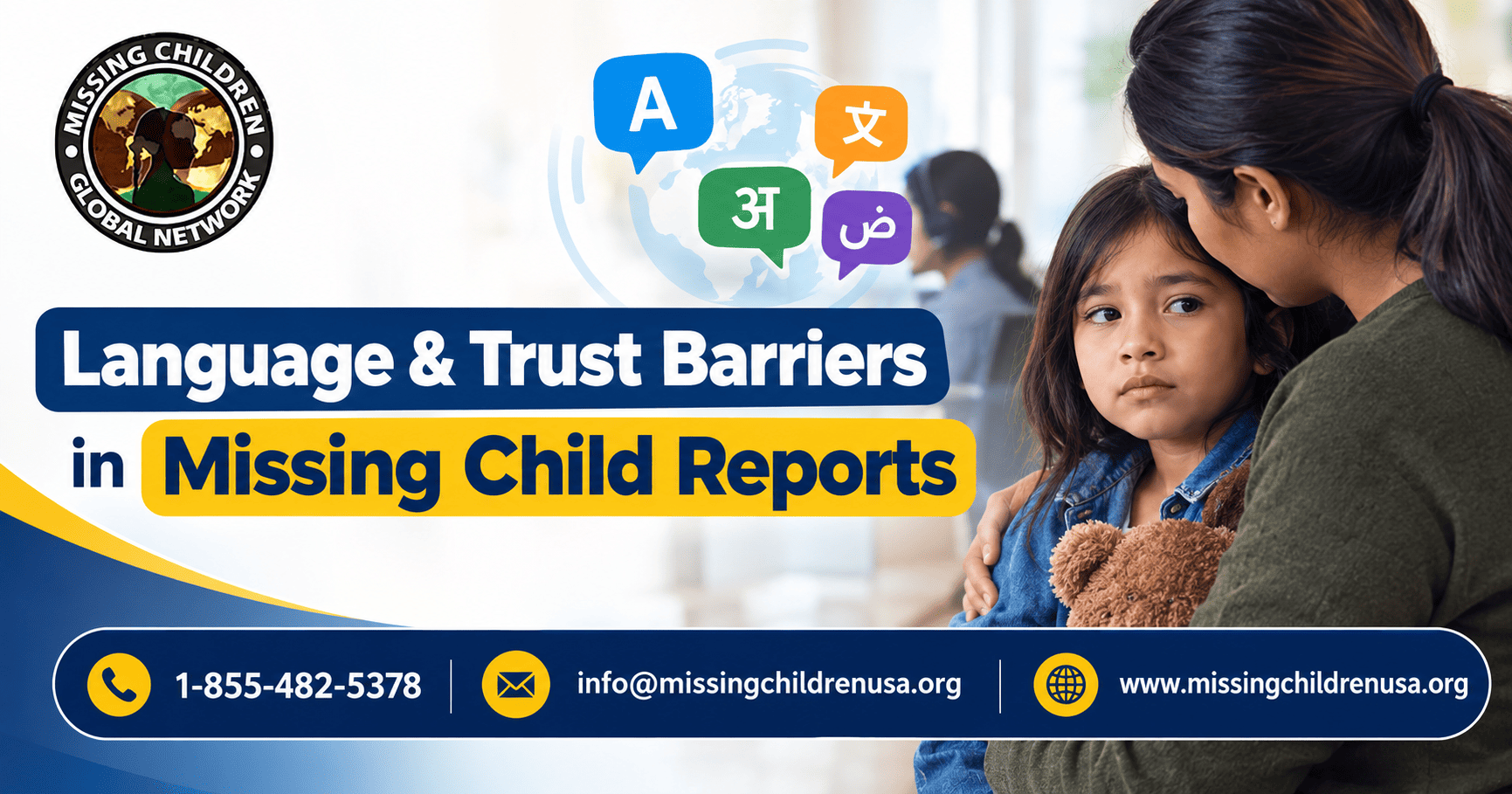
Not every family is fluent in English. When a child goes missing, calling a hotline or speaking with an officer in a language you don’t fully understand can feel overwhelming — and the fear of miscommunication can make things worse. Many families simply don’t know that translation services and bilingual support are available.
2. Fear of Immigration Consequences
This is perhaps the most significant barrier. Families who are undocumented, or who have mixed-status households, may worry that contacting police or government agencies will lead to scrutiny of their immigration status. This fear can override the urgency of reporting a missing child.
3. Distrust of Law Enforcement
In many countries, police are not seen as protectors but as sources of danger. Immigrant families who carry that experience may feel deep distrust when it comes to approaching local law enforcement, even in a crisis.
4. Lack of Awareness About Resources
Many families simply don’t know where to turn. They may not be aware of child-focused nonprofits, hotlines, or advocacy organizations like Missing Children Global Network that can guide them through the process confidentially and compassionately.
What Florida Law Says — You Have the Right to Report a Missing Child
Here is something every immigrant family in Florida needs to know: reporting a missing child is a right, not a privilege — and it does not require immigration status.
Florida law enforcement agencies are required to accept a missing child report immediately. There is no waiting period. You do not need to prove your legal status to file a report. You do not need a Social Security number or ID to ask for help finding your child.
Florida also has an active AMBER Alert system, which can be activated for cases involving children in immediate danger. This network broadcasts alerts across television, radio, digital road signs, and mobile devices to mobilize the entire community in the search.
What About ICE?
Under current policy, local law enforcement agencies in many Florida jurisdictions have community trust policies that limit sharing information with federal immigration authorities during certain interactions, including reports about missing or endangered children. However, policies can vary by county and city. Organizations like Missing Children Global Network can advise you on how to navigate your specific local situation safely.
How Missing Children Global Network Bridges the Gap
Missing Children Global Network was founded on a simple but powerful belief: every child deserves to be found, and every family deserves access to help — no matter where they come from or what language they speak.
For immigrant families in Florida dealing with a missing child, the organization provides:
- Multilingual support — Assistance in multiple languages so families can communicate clearly and confidently during one of the most stressful moments of their lives.
- Culturally sensitive guidance — Staff and volunteers who understand the fears and experiences that immigrant communities carry, and who approach every case without judgment.
- Coordination with local authorities — Help navigating the process of filing a report, communicating with law enforcement, and understanding what happens next.
- Community outreach — Partnerships with local immigrant community organizations, schools, and faith groups to spread awareness about missing children resources.
- Confidential assistance — Support that protects family privacy to the greatest extent possible while ensuring the child’s safety remains the top priority.
If your child is missing in Florida, Missing Children Global Network can help you take action — starting right now.
Steps to Report a Missing Child in Florida
If your child is missing, act immediately. Here is what to do:
- Call 911 right away. Florida law requires police to take a missing child report immediately — there is no waiting period.
- Contact the Florida Missing Children Information Clearinghouse at 1-888-356-4774. They maintain statewide records and can coordinate with multiple agencies.
- Reach out to Missing Children Global Network for multilingual support, help communicating with authorities, and guidance on next steps.
- Gather key information to share with responders: your child’s full name, age, physical description, what they were wearing when last seen, and the location and time they were last seen.
- Share information on social media with care, using official channels recommended by law enforcement to avoid interfering with the investigation.
- Stay accessible. Keep your phone charged and available so investigators can reach you.
Frequently Asked Questions
Can I report a missing child in Florida if I am undocumented?
Yes. You can and should report a missing child regardless of your immigration status. Florida law enforcement is required to accept missing child reports from anyone, and your child’s safety is the only priority. Organizations like Missing Children Global Network can also help you through the process confidentially.
What if I don’t speak English well enough to call 911?
Florida’s 911 system has language interpretation services available. You can ask for an interpreter as soon as the call connects. Missing Children Global Network also offers multilingual support and can help you communicate with authorities in your own language.
How quickly does Florida law enforcement act on a missing child report?
Florida law requires police to accept and begin acting on a missing child report immediately — there is no mandatory waiting period. For cases involving young children or situations suggesting danger, an AMBER Alert can be activated very quickly.
Will reporting a missing child lead to questions about my immigration status?
Local law enforcement’s focus when a child is reported missing is finding that child. Many Florida jurisdictions have policies limiting their involvement in immigration enforcement during community interactions like this. For specific concerns about your situation, Missing Children Global Network can offer guidance before you make contact with authorities.
What information do I need to report a missing child in Florida?
Provide your child’s full name, date of birth, physical description, the clothing they were last seen wearing, when and where they were last seen, and any information about who they may have been with. A recent photograph is also extremely helpful.
Your Child Deserves Every Chance to Come Home
When a child goes missing, no barrier — not language, not fear, not uncertainty — should stand between a family and the help they need. Immigrant families in Florida have the right to report a missing child and to receive support, just like anyone else.
Missing Children Global Network is here to make sure that right is real and accessible. Whether you need help communicating with law enforcement, understanding the process, or simply knowing where to start — reach out today.
Contact Missing Children Global Network now. Every second matters, and you do not have to face this alone.