
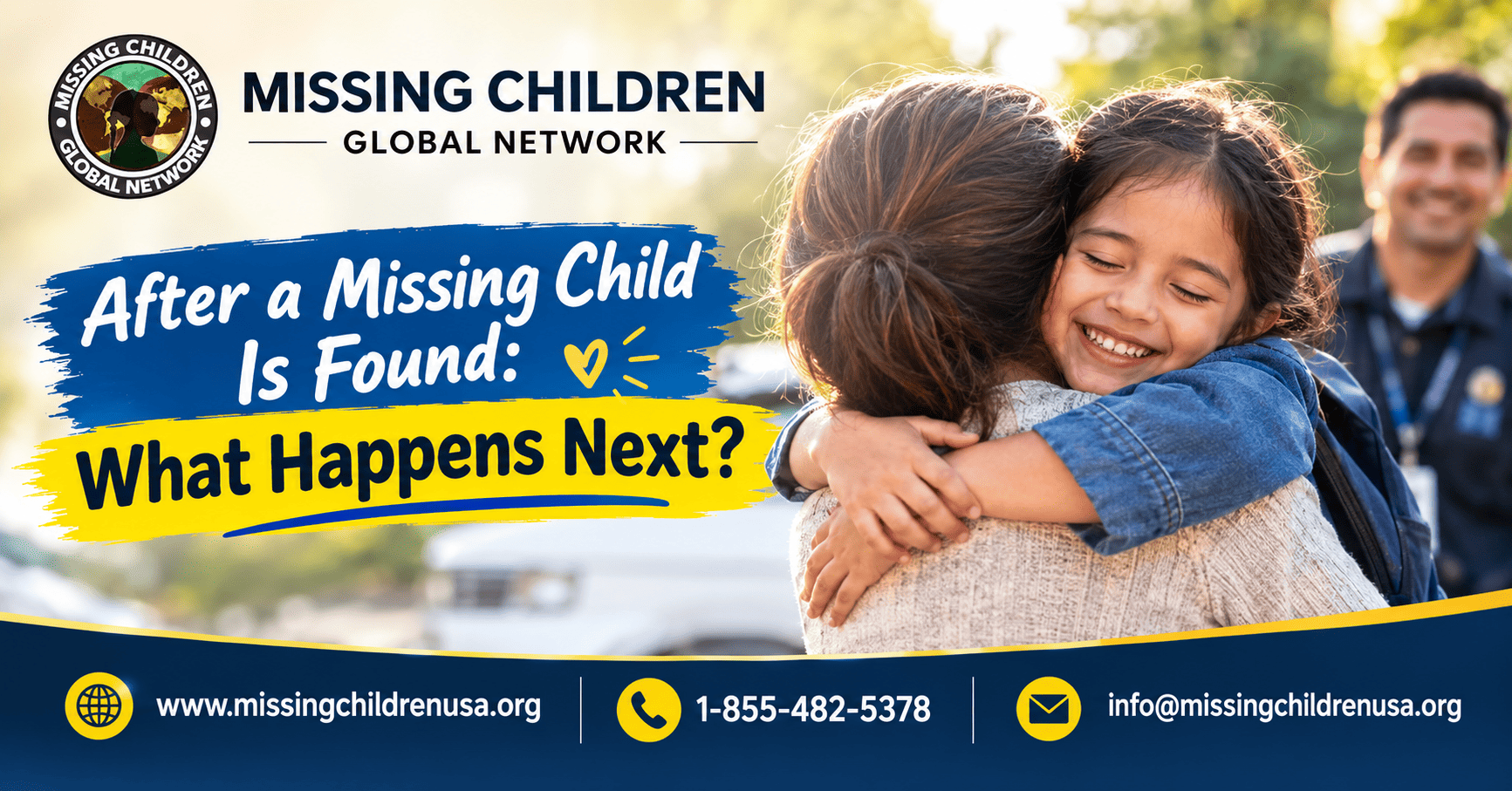
Finding a missing child is not the end. Most families do not realize that until they are already inside it.
The relief is real. So is the shock of discovering that nobody told them what comes next. Missing Children Global Network has been part of that next with Florida families for over 15 years. The search gets attention. The recovery almost never does.
What Happens Right After a Child Is Found?
Law enforcement moves first. Safety assessment, medical check, initial interview. None of it is fast, and none of it is skippable.
Parents waiting nearby often say this is one of the hardest parts of the whole experience. Their child is safe. They know it. And they are being asked to stand back while strangers work through a process they did not know existed.
It helps a little to understand why. The assessment catches harm that does not show on the surface. The interview captures details while they are still accurate. Certain trauma responses only present within a specific window after an event. Every step is there because something went wrong in a past case where it was skipped.
Holding onto that does not make the waiting easy. It just makes it possible.
Coming Home Is Not the Finish Line
Most parents picture reunification as the end point. It is closer to a starting line.
Children who return after being missing are not reset. Some talk immediately. Some go silent for days. Some seem almost fine and then fall apart three weeks later when the urgency fades and they finally slow down enough to feel it.
All of that is normal.
What tends to help in those first days is a home that does not ask anything of the child. No retelling of what happened. No audience of worried relatives. No gentle questions that, to a child still processing something frightening, can feel like pressure rather than love.
Investigators handle the factual interview. The family’s job is simpler and harder at the same time: just be there, without expectation.
Parents struggle with this. Wanting answers is natural. But timing matters more than intention when a child is still finding their footing.
Emotional Recovery Takes Longer Than Anyone Expects
Trauma does not follow a schedule families recognize.
Some children start struggling within days. Sleep breaks down, appetite disappears, small things trigger reactions that seem disproportionate. Others hold steady for weeks and then hit a wall when something unrelated brushes against a memory. A sound. A school assignment. A comment from a classmate that nobody else noticed.
Neither pattern means recovery is going wrong.
Professional support is worth arranging early, not as a last resort when things become undeniable. A therapist with specific experience in childhood trauma works differently from a general counselor. The pacing matters. The ability to sit with a child without pushing them toward a version of events they are not ready to put into words yet is a skill that takes years to develop.
Missing child recovery services that stay involved after a child is found often connect families to those specialists. Reaching that support early tends to matter more than most families expect.
Frequently Asked Questions
- What happens first when a missing child is located?
Scene safety, then medical evaluation, then an initial interview. How long it takes depends entirely on what the child went through. - Should parents ask the child what happened right away?
No. Questions that arrive too early usually produce shutdown or a version of events shaped by what the child thinks the parent needs to hear. Presence without pressure matters more than answers in those first hours. - Can trauma appear even after a child comes home safe?
Yes. Physical safety and psychological recovery are separate things that do not happen on the same timeline. Symptoms can surface days later or weeks later with no obvious trigger. - When should families seek professional help?
Earlier than instinct suggests. Most families wait until things get bad enough. Children carry the weight longer than they need to. - How can families help in the weeks after reunification?
Routine. Predictable meals, consistent sleep, and familiar small activities. Not because they fix anything, but because they give a child something reliable to exist inside while they process something that felt completely outside their control. Small decisions returned to the child help too. The loss of control is often what made the experience most frightening.
Recovery Is a Longer Road Than the Search
The families who move through it steadiest are not the ones who had it easier. They are the ones who went in knowing it would take time, that it would not look like a straight line, and that asking for help is part of what recovery actually requires.
Missing Children Global Network stays with Florida families beyond the search, connecting them with missing child recovery services, trauma-informed referrals, and support through reunification, at no cost. Call 1-855-482-5378