
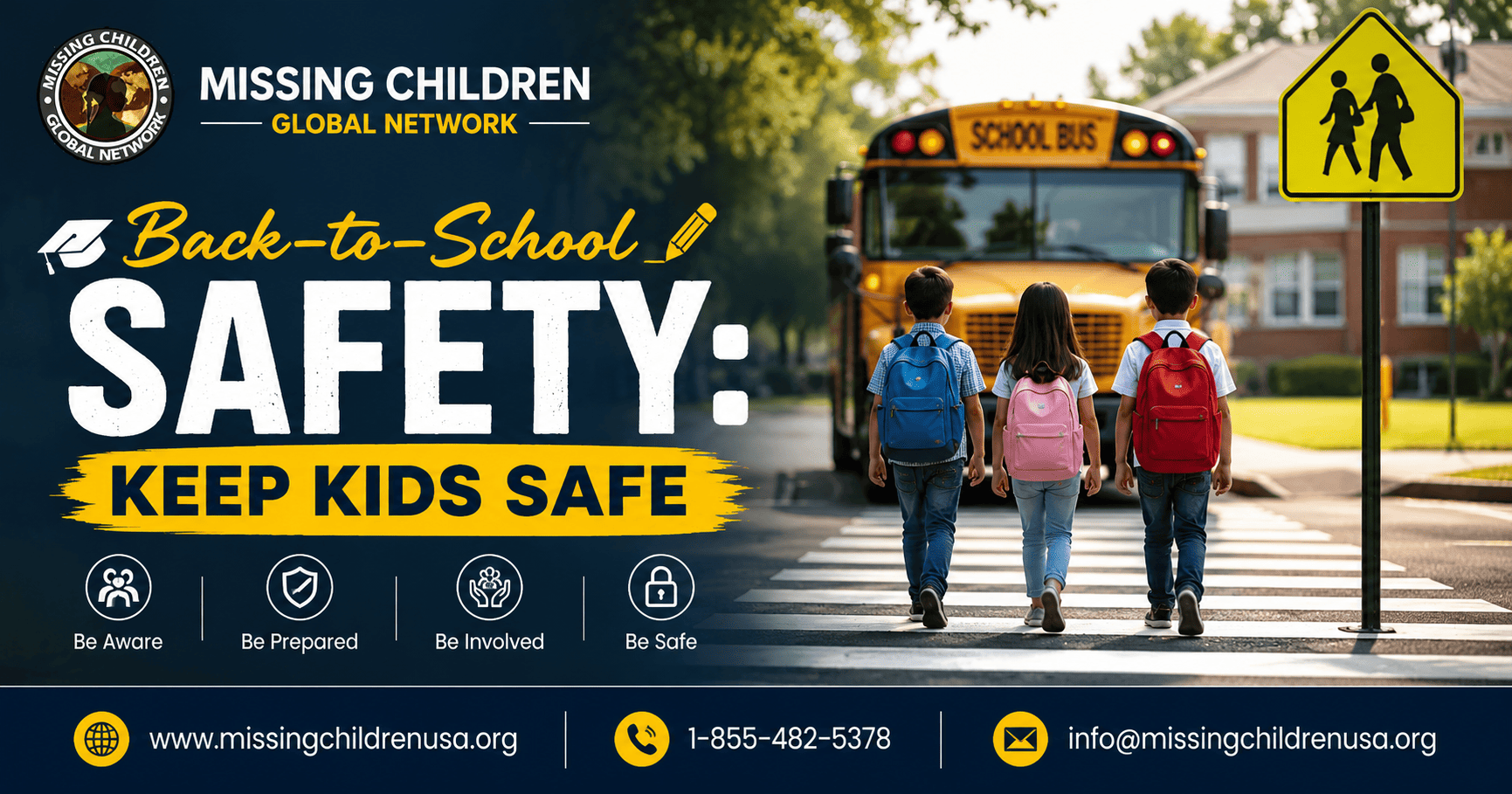
The first few weeks of school can be hectic. New classes, new schedules, different pickup times, and unfamiliar routes can take some getting used to. For children, those changes can create safety gaps that parents may not notice right away.
A bus stop may be less familiar than expected. A child might take a shortcut on the way home, wait alone for a few minutes, or get separated from their group after school. Families looking for Missing Child Help Florida resources often begin searching only after something has happened. A little preparation before school starts can help prevent some of these situations.
At Missing Children Global Network, child safety education is part of the work. Parents, schools, and children can all take simple steps to make the journey to and from school safer.
1. Staying safe around school bus routes and stops
Bus stops can get crowded quickly. There are children, parents, moving vehicles, and buses arriving and leaving, sometimes within a very short period. That can make it harder for drivers and children to notice what’s happening around them.
Teach your child to stay at least six feet away from the curb while waiting for the bus. They should wait until the bus has stopped completely before approaching it.
Crossing in front of a bus requires extra care. Teach children to make eye contact with the driver before crossing. If they can’t see the driver, they should assume the driver can’t see them either.
The time before and after the bus arrives matters too. If your child gets to the stop several minutes before the bus and has to wait alone, consider arranging for a neighbor, sibling, or another parent to be nearby.
For families concerned about Missing Children Miami, supervision around bus stops and other transition points is worth paying attention to. These short periods between home, school, and transportation can easily be overlooked.
2. Safer walking paths, crossings, and school grounds
Before school begins, walk the route with your child. Use the actual path they are likely to take rather than simply checking a map.
Look at the crossings along the way. Are there working signals? Are there places where parked cars make it difficult to see approaching traffic? Does the route pass through a quiet area where your child could be alone?
It is also worth looking closely at what happens on school grounds during arrival and dismissal. Those times can become crowded, with many children and vehicles moving at once.
Parents can ask the school a few straightforward questions. Who supervises students during drop-off and dismissal? What happens if someone other than a parent arrives to pick up a child? Is identification checked? What is the procedure when a child isn’t picked up on time?
These questions aren’t about blaming anyone. They help parents understand how the school handles situations that can happen during a busy school day.
3. Simple safety habits parents and schools can reinforce
Child safety doesn’t have to involve complicated rules. A few simple habits can become part of a child’s normal routine.
- Set a check-in rule. Your child can call or message you when they arrive at school or get home.
- Practice what your child should say and do if an unfamiliar person approaches them. Give them clear examples instead of simply saying, “Don’t talk to strangers.”
- Keep a recent photograph and basic description of your child. Update it regularly as they grow and their appearance changes.
- Encourage children to walk or travel with a friend whenever possible.
- Make sure your child knows which adults they can turn to if they feel lost, uncomfortable, or unsafe.
Schools can reinforce these lessons during the first few weeks of the school year. A short safety reminder, visible staff during arrival and dismissal, and clear procedures for late pickups can all help.
FAQs
- How far should children stay from a school bus while waiting?
Children should stay at least six feet back from the curb while waiting. They should approach the bus only after it has stopped completely and it is safe to board.
- What should a child do if they drop something near the bus?
They should tell the bus driver instead of trying to pick it up themselves. If an item falls near or underneath a bus, the driver can help them retrieve it safely.
- What makes a walking route safer for children?
Routes with clear visibility, safe crossings, working signals, and fewer isolated areas are generally easier for children to navigate safely. It also helps when children use the same route regularly.
- How can parents prepare children for a new school route?
Walk the route together before school starts. Do it at roughly the same time your child will travel during the school day. Point out important landmarks and places where they can ask a trusted adult for help.
- What should schools do to improve student safety?
Schools can have staff present during arrival and dismissal, maintain clear pickup procedures, check identification when required, and make sure employees understand what to do when a child is late or isn’t picked up.
Make every school journey a safer one
Most safety problems don’t begin with a dramatic event. Sometimes it is a child waiting alone, taking an unfamiliar shortcut, or not knowing who to ask for help. These situations are easier to address when parents and schools think about them before they happen.
If you’re looking for Missing Child Help Florida resources or information related to Missing Children Miami, Missing Children Global Network provides child safety education, investigative assistance, and community support. Parents can reach out to learn more about practical ways to prepare children and make their everyday trips to and from school safer.